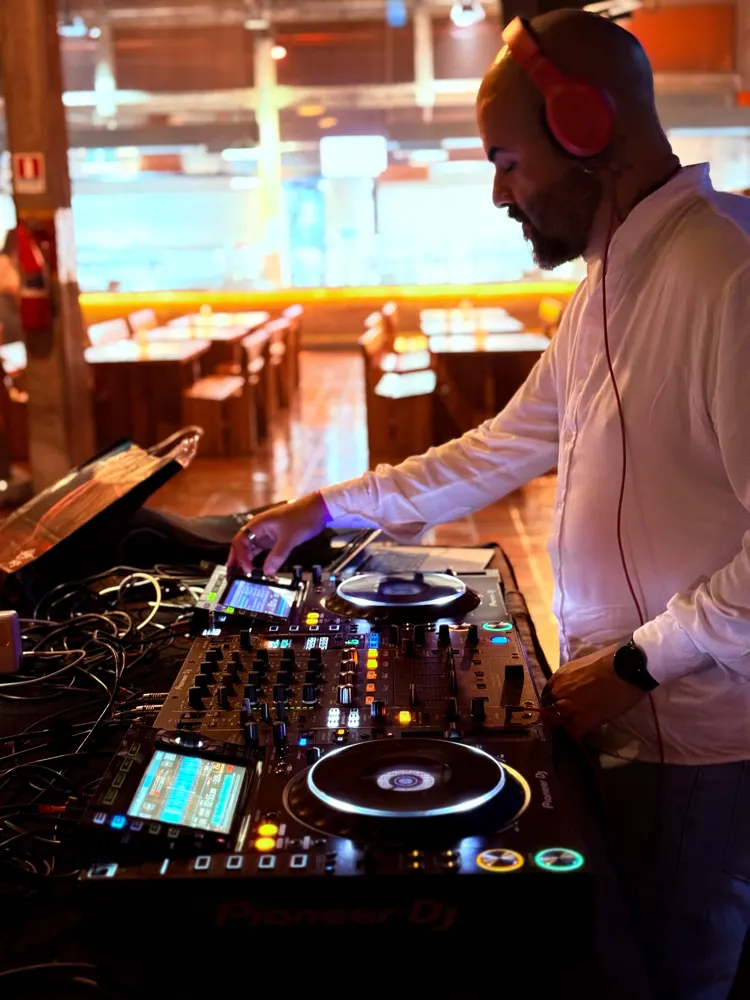
Signature project
Grooves & Brasilidades
MPB, samba, samba rock and funk soul with the artist's own exclusive remixes. Rodrigo's signature.
BrasilidadesMPBSambaSamba RockFunk Soul

Brazilian grooves, house and hits that cross generations, in a set built for your crowd. Clubs, festivals, corporate events and private parties.
On the decks since 1999 · Sesc Pompeia · proposal within 24h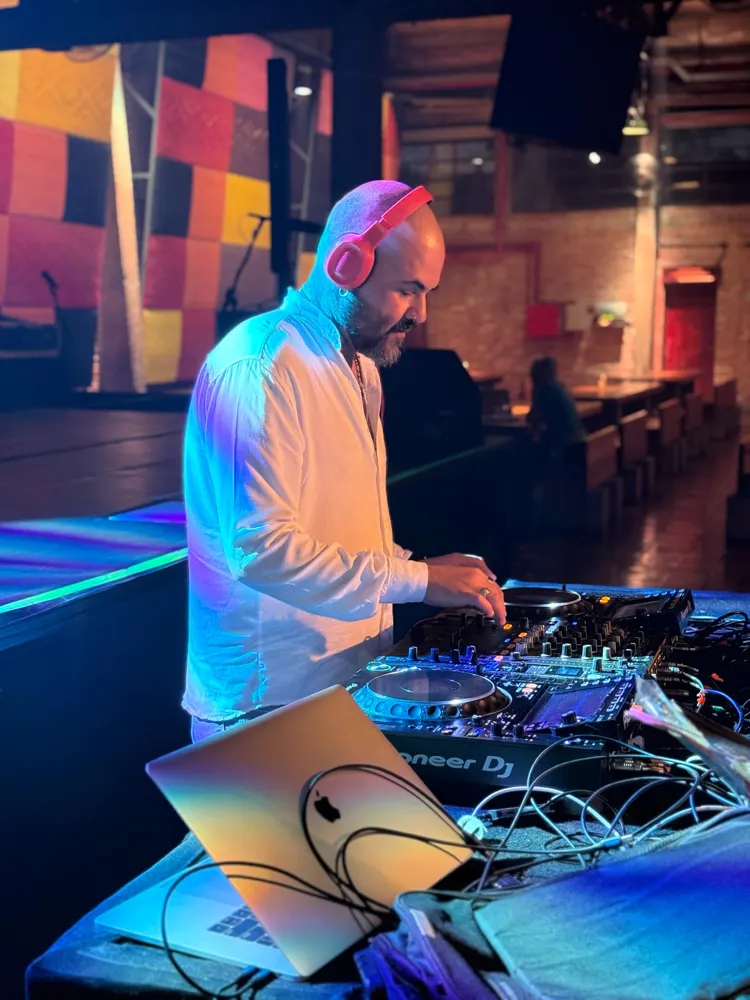
You invest in the venue, bar, decor and promotion. If the dance floor is empty by 11 pm, none of it shows.
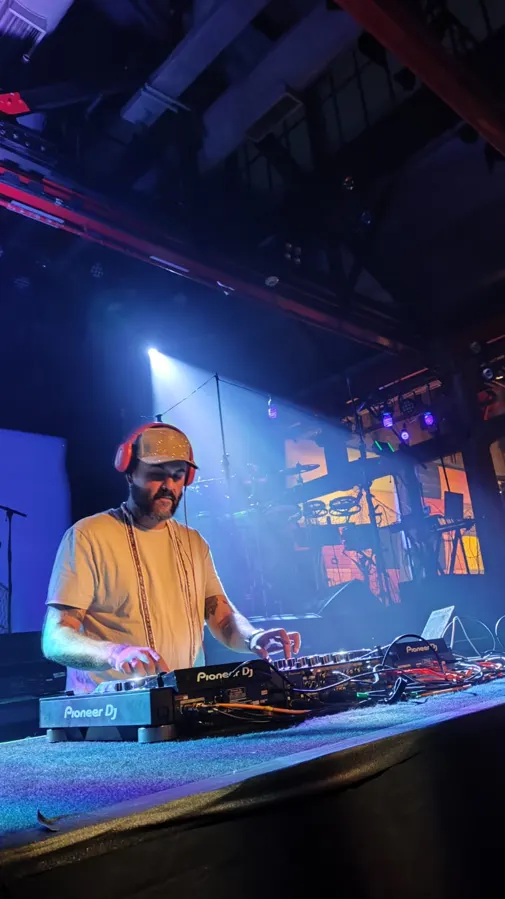
Residencies and one-off dates with a set that holds the crowd until closing.
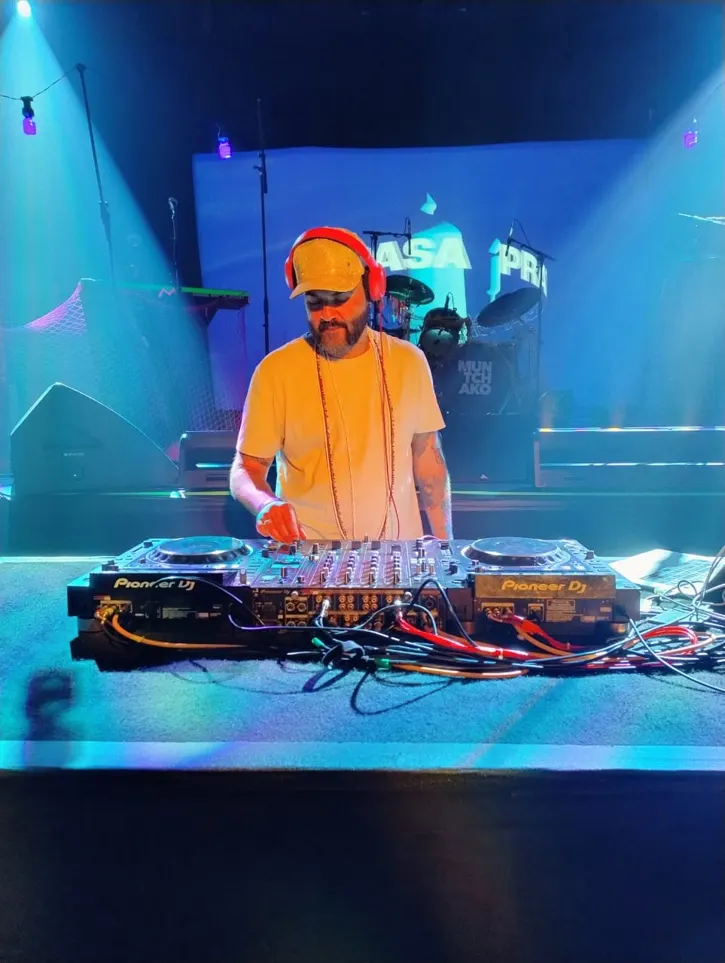
A line-up slot with a signature sound, Brazilian or electronic.
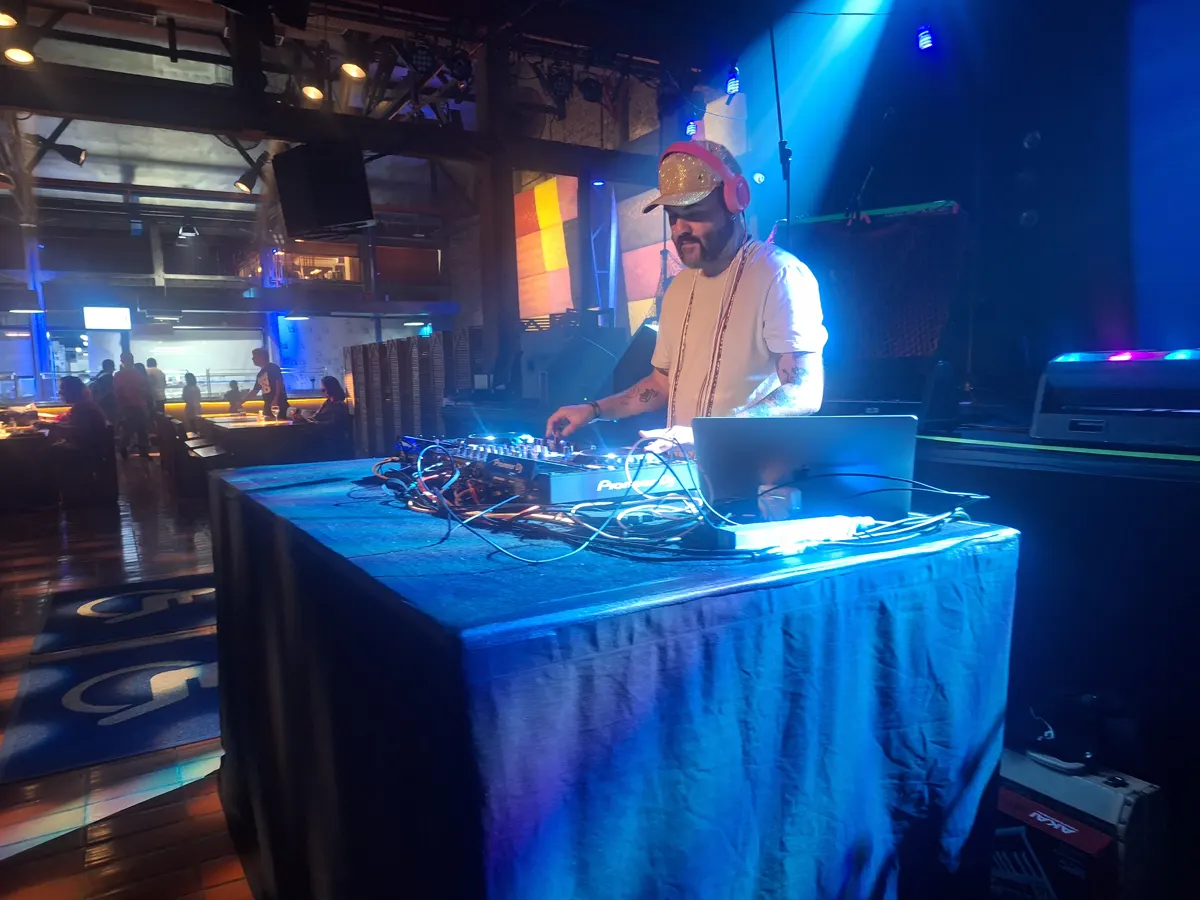
From cocktails to after-party: an elegant soundtrack that turns into a dance floor at the right time.
A repertoire aligned with you, pleasing everyone from grandparents to friends.
Pick one style, mix several or go Open Format: Rodrigo moves through all of them reading the crowd.
MPB, samba, samba rock and funk soul with the artist's own exclusive remixes. Rodrigo's signature.
From classic disco to tech house: the elegant groove that holds the floor all night.
Drum n bass, jungle, psy and Miami bass: bass, speed and adrenaline for the peak of the night.
Flash house, dance, pop, rock and hip hop: the anthems everyone sings along to.
A QR Code at the party opens the request page on their phone. Guests pick a song, leave a message, and the request shows up instantly on the DJ's panel.
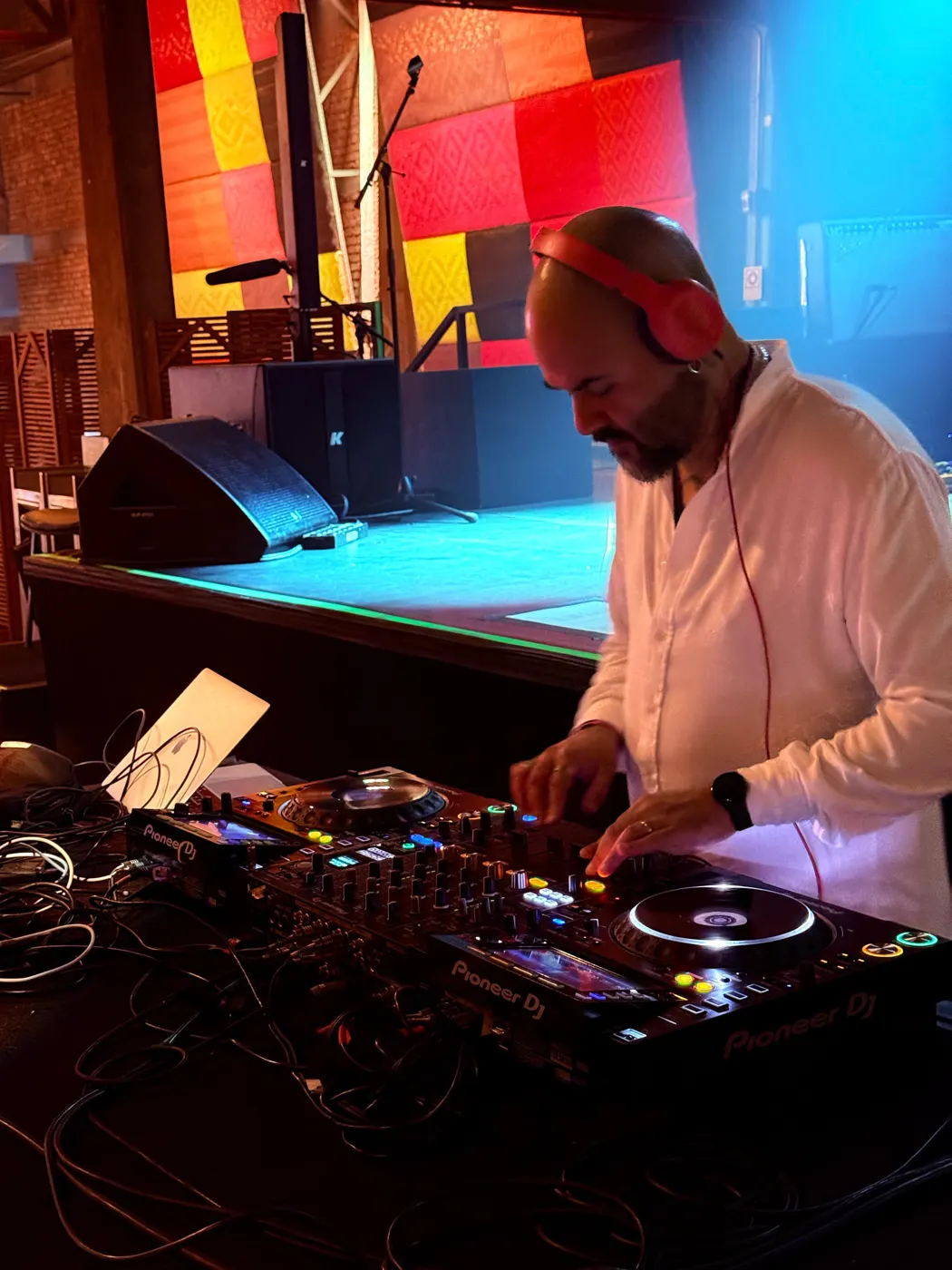
No blind promises: listen to the releases and a live set before you decide.

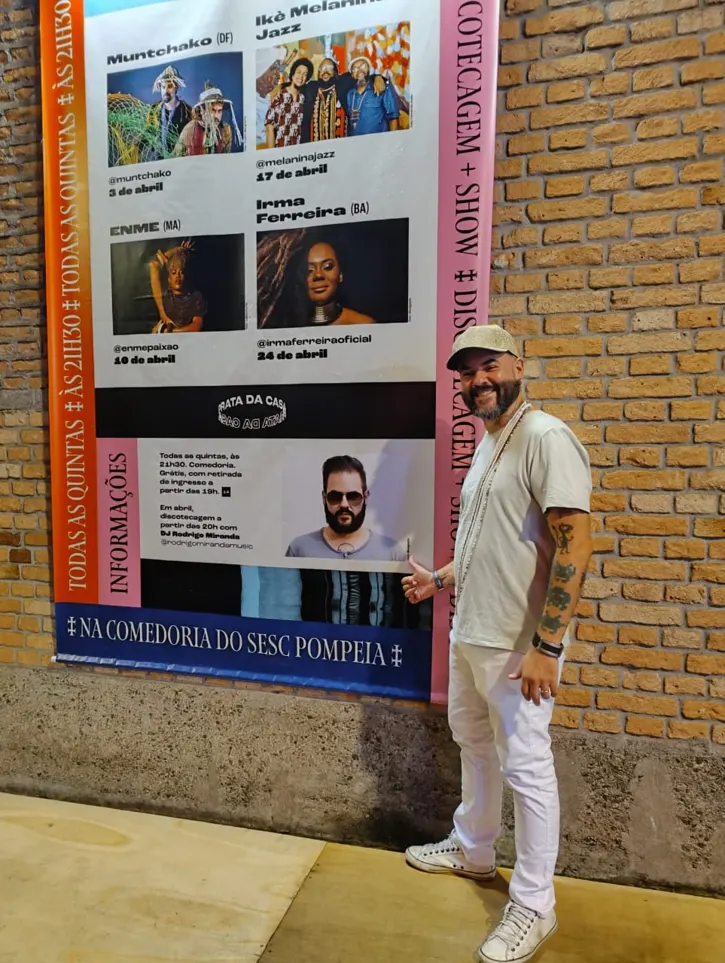
DJ and music producer Rodrigo Miranda is known for energetic, eclectic and surprising sets. He has played clubs, private parties and festivals across Brazil, blending generation-defining classics with modern reworks and exclusive remixes.
“Music has always been my greatest passion. Being on stage is a dream come true, and sharing that emotion with the crowd is indescribable.”Rodrigo Miranda📍 Comedoria at Sesc Pompeia · São Paulo
Setup, duration and music styles. Takes 1 minute.
Within 24 hours, tailored to your venue.
Must-play songs and what's off-limits. You decide.
Own setup and rider sorted. You just enjoy.
The history, trivia and perfect moment for each style Rodrigo brings to the dance floor.
House01How one DJ, a few drum machines and the Warehouse dance floor changed club music forever.
Tech House02Why tech house became the soundtrack of club and festival dance floors in recent years.
Disco · Disco House03From 1970s New York to disco house: the story of the sound that survived even a record bonfire.
Samba Rock04From Jorge Ben's swing to São Paulo's neighborhood dances, the partner dance rhythm that never goes out of style.
HipHop · Miami Bass05A 1973 block party, a bass that shakes the floor and the bridge that carried this sound to Brazil.
Drum N Bass · Jungle06Chopped breakbeats, sound-system bass and a Brazilian hit in the UK charts.
Psy07The hypnotic sound born at open-air parties in India that found one of the world's biggest scenes in Brazil.
Funk Soul08From James Brown to the Black Rio movement: the music that turned dances into celebrations.
Samba · MPB · Brasilidades09How Brazilian music classics get a new life in remixes made for dancing.
Flashback · Pop · Dance · Rock1080s and 90s pop, dance, rock and flash house: the science and magic behind the songs everyone sings.
The name comes from a place: The Warehouse, a Chicago club where Frankie Knuckles held a residency from the late 1970s. The records he played, a blend of disco, soul and electronic sounds, came to be called “house music” by the regulars.
In the mid-1980s, local producers began making their own tracks with drum machines such as the Roland TR-808 and TR-909, punchy basslines and a steady four-on-the-floor kick, the foundation of almost all dance music since.
Across the Atlantic, the sound exploded in the UK at the end of the decade with the acid house movement. Knuckles became known as the “Godfather of House”, and the style split into dozens of sub-genres.
On the dance floor, house works because it is both danceable and elegant: it holds the energy without wearing people out and blends naturally with disco, soul and Brazilian grooves. That's why it shows up in almost every one of Rodrigo's sets.
Tech house was born from the urge to merge two worlds: the swing and groove of house with the drier, minimal and hypnotic textures of techno. The style took shape at UK parties in the 1990s.
The formula is simple and effective: a solid kick, a bassline that drives the track, detailed percussion and few melodic elements. The result is music that builds slowly and holds the floor for hours.
Over the last decade the style went global and became one of the most played in clubs and festivals, from Ibiza to São Paulo.
At an event, tech house is perfect for the moment when the floor is already warm and calls for steady energy without losing danceability.
In the 1970s, disco took over New York in clubs like Paradise Garage and Studio 54: string sections, horns, powerful vocals and the kick marking all four beats. In 1977, Donna Summer's “I Feel Love”, produced by Giorgio Moroder, proved it could all be done with synthesizers.
In 1979 the backlash hit hard: “Disco Demolition Night” in Chicago ended with records blown up in a stadium. It looked like the end.
It wasn't. Disco survived on underground floors and became the foundation of house. In the late 1990s, French producers began sampling disco in house tracks, and “Music Sounds Better With You” (Stardust, 1998) became an anthem of what we now call disco house.
On the dance floor, disco and disco house are a wild card: they lift the room from cocktails to closing time and please every age group.
Samba rock is a Brazilian invention: the samba beat meeting rock guitar and the groove of soul and funk. One of the central names of this mix is Jorge Ben (now Jorge Ben Jor), who from the 1960s developed a unique, swinging way of playing guitar.
It was at the dances of São Paulo, especially in its outskirts, that samba rock took its best-known form: a partner dance full of spins and steps passed down from generation to generation.
Over the decades the style gained new voices, from Trio Mocotó to Seu Jorge, and it remains alive at dances and dance floors across the country.
On the floor, samba rock has a superpower: it gets couples dancing together and connects those who lived the old dances with those discovering the rhythm today. It's a key part of the Grooves & Brasilidades project.
August 1973, the Bronx, New York: at a neighborhood party, DJ Kool Herc used two turntables to extend the “breaks”, the instrumental sections where people danced the most. The foundations of hip hop were born there: DJing, MCing, breaking and graffiti.
In the 1980s, Miami created its own version: Miami bass, faster, more festive and driven by the deep low end of the 808 drum machine, popularized by groups like 2 Live Crew.
That sound crossed the continent and became one of the foundations of Rio de Janeiro's baile funk. In São Paulo, the São Bento subway station became a meeting point for breakdancers in the 1980s, and Brazilian hip hop found its own voice with names like Racionais MC's.
On the floor, hip hop and Miami bass bring attitude and bass: they work great at parties, graduations and the “turn it up” moment of the night.
In the early 1990s, the UK rave scene sped up breakbeats and mixed them with the bass and vocals of reggae and dancehall. Jungle was born, with chopped drums at high speed, often built from the famous “Amen break”, a drum passage from 1969.
Within a few years the sound became cleaner and more technical and came to be called drum and bass, usually between 160 and 180 BPM. In 1997, Roni Size's collective Reprazent won the Mercury Prize, one of the most important awards in British music.
Brazil plays a prominent role in this story: DJ Marky became a global reference, and “LK” by DJ Marky & XRS entered the UK charts in the early 2000s.
On the floor, drum n bass and jungle are pure adrenaline: perfect for the peak of the night and for crowds that want intensity.
Psytrance has its roots in Goa trance, which emerged between the late 1980s and early 1990s at open-air beach parties in Goa, India, attended by travelers from all over the world.
The style is defined by fast, rolling basslines, layers of psychedelic synths and a hypnotic progression that carries the floor for long stretches, usually above 135 BPM.
Brazil embraced psy like few other countries: it has one of the largest scenes on the planet, with major open-air festivals such as Universo Paralello in Bahia.
On the floor, psy is ideal for outdoor parties and for the night's moment of collective euphoria, when the crowd wants to surrender to the music.
In the 1960s, James Brown changed Black American music by putting rhythm at the center of everything: bass and drums locked on the first beat, short horn stabs and the band working as a groove machine. It was the birth of funk, soul's sibling.
In Brazil, this sound arrived in force in the 1970s. Artists like Tim Maia, Cassiano, Hyldon and Banda Black Rio created soul with a Brazilian accent, and the “bailes black” of Rio de Janeiro and São Paulo drew huge crowds to dance.
Those dances were also spaces of affirmation and pride, leaving a legacy still heard today in samba rock, hip hop and contemporary Brazilian music.
On the floor, funk soul is irresistible: elegant groove, striking voices and that urge to dance that crosses generations.
Samba was born in Rio de Janeiro in the early 20th century, and “Pelo Telefone”, registered in 1916, is considered the first recorded samba. Since then it has become the foundation of much of Brazilian music.
In the 1960s, televised music festivals launched a generation of artists and the term MPB (Brazilian Popular Music), with names like Elis Regina, Gilberto Gil, Caetano Veloso and Milton Nascimento.
“Brasilidades” is how many DJs describe bringing this repertoire to the dance floor: edits and remixes that keep the soul of the songs but add the tempo and low end of a club set.
That's exactly the idea behind the Grooves & Brasilidades project: getting the crowd to sing along and dance at the same time, blending emotional memory with dance-floor energy.
Just play the first seconds of an 80s or 90s classic and the whole room reacts. There's a reason: psychology studies show that music heard in adolescence and early adulthood is stored in memory with an especially strong emotional charge.
Flashback brings together the best of that emotional archive: the pop that ruled the radio, 90s dance and eurodance, and the rock anthems everyone sings along to.
In Brazil, “flash house” became the affectionate name for the house and dance classics that defined the dance floors and radio of the 80s and 90s, and that still make crowds raise their hands today.
At an event, flashback is the bridge between generations: older guests relive it, younger ones discover it, and everyone dances together.
Choose the setup, duration and music styles. Your tailored proposal arrives within 24h, no strings attached.
Yes, his own setup (Pioneer controller). The venue provides PA, monitors and booth per the technical rider, or you can add the full setup in the quote.
Absolutely. Tick the styles in the quote and, before the event, you'll align must-play songs and what's off-limits.
It means the DJ isn't tied to one style: he moves across all of them and picks the next track by the crowd's reaction. Ideal for mixed audiences.
You get a QR Code with your event's name to print or show on a screen. Guests scan it, request songs and leave messages, and the DJ sees everything in real time and plays the requests that fit the floor.
You set it in the quote. The proposal is based on your event's hours.
Yes. Tell us the city so the proposal includes logistics.
The sooner the better. Fridays and Saturdays fill up first.
Every event has a different setup, venue and duration. The proposal is tailored and arrives within 24h.
Prefer email? contato@djrodrigomiranda.com.br